
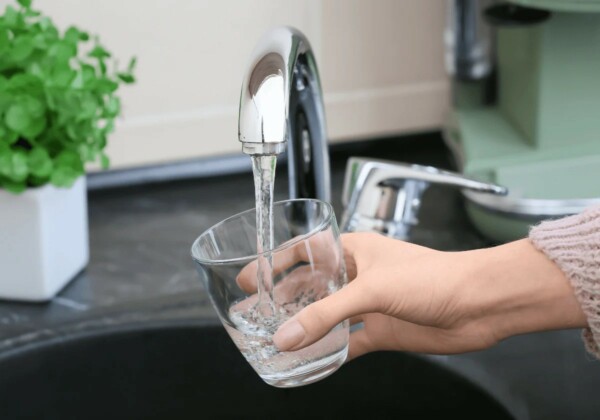
High quality potable water from the tap is something we take for granted. Lots of people in the world don’t have this luxury. Image thanks to CV Water Consultancy.
What is potable water and what should a designer know about working with it?
What is potable water?
Potable water is drinking water suitable for human consumption. We all know exactly what that is and probably have a very good idea of what won’t make the grade. Let’s bottom out what makes water safe for drinking and what is unsuitable. Danger to health is the big thing; some health issues are quite immediate and serious but others may be longer term. If you are simply interested in UK drinking water quality, this is quite a good read from CV Water Consultancy. Read on with our paper here for a deeper look at the engineering around potable water systems.
Drinking water can either be contaminated with inorganic substances i.e. chemical compounds, or organic organisms such as microbes or algae. “Foreign bodies” could be something as topical as microplastics. Storing and transporting drinking water without it becoming contaminated are challenges as old as humanity. What has been perceived as drinking water at source might then be contaminated with harmful chemicals on day one or over a period from being in contact with surfaces. Lead within leaded alloys would be a good example here.
The engineering of storage and transport systems for potable water are of particular interest for designers, who must avoid the pitfalls of contamination issues. This isn’t always going to be possible; think of potentially lethal Legionella bacteria prevalent where scale and elevated temperatures in static storage are experienced. Here, occupational health & safety procedures play a predominant role in prevention.
Also relevant to our paper here is potable water quality. Even if it isn’t harmful to humans, few of us would choose drinking water that has an odd taste. If humans can detect remarkably small concentrations of trace chemicals that taint water quality, that is a design issue in potable water systems. Similarly, even if it is totally harmless, few of us would tolerate drinking water that appeared to be discoloured. Again, a design issue. It is hard wired into the human brain to expect drinking water to be “crystal clear.”
Why are Sarum Hydraulics interested in potable water?
Since day one over forty years ago, people have used our Micropac hand pumps for various potable water applications. Our knowhow on high pressure hand pumps for seawater and brackish water have also provided applications for our equipment in reverse osmosis desalination equipment. If you needed to test a reverse osmosis system before running it under power, a Micropac hand pump is the kit to use.
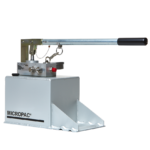
A Micropac MW series pressure test set commonly used for testing Reverse Osmosis systems.
What is the difference between FDA approvals, EPA regulations, NFS/ANSI161 approved, WRAS certified, the EU Drinking Water Directive (DWD) and EU Food Contact Materials regulations?
Sorry to start with a real mouthful but if you are designing for potable water, regulations are a good place to start.
Just to summarise in one paragraph who all these bodies are. Feel free to correct us.
The US Environmental Protection Agency (EPA) is focused on the quality of drinking water supplied to the public in order to “protect public health.” The EPA draws upon the list of materials certified by the US National Sanitary Federation (NSF) to standard ANSI 61. This standard covers materials used in drinking water systems and approved for pipework and other metallic or non-metallic materials such as seals. The NSF will also assess and approve equipment and devices for drinking water systems. Their website has a useful materials checker for the designer, but it is specific to US regulations.
The UK Water Research Council maintain a WRAS (Water Regulations Advisory Scheme) list of approved materials compatible with drinking water systems.
The EU Drinking Water Directive (DWD) cross refers with the forthcoming ‘EU Positive lists of approved materials in contact with drinking water’. The lists cover organic, metallic, cementitious, and enamel/ceramic/other inorganic materials.
A parallel path of regulation covers materials in contact with foodstuffs. That isn’t the same as drinking water systems, although there is obvious overlap. The US Food and Drug Administration (FDA) are looking at materials in contact with foodstuffs, drinks and of course potable water from processing through to packaging. Here at Sarum Hydraulics, potable water storage pipes, vessels, bottles and bags will be of particular relevance in assessing what materials we specify.
And indeed, you do have to start somewhere if you are designing a drinking water system and have multiple lists of approved materials, dependant on what market you plan to sell into. Often our challenge is whether an approved material is available to buy from a stockholder in the form we need it, e.g. bar stock for machining. If you are a manufacturer of say a proprietary approved moulded water valve with existing supply chains for approved materials and components, then you will see the challenge totally differently. Your moulder may have the chosen material in stock, so something quite exotic is a good choice.
When selecting a material, we find that a great starting point is to reference FDA approved materials for foodstuffs. This is mainly because commonly available FDA approved materials are just so visible within stock lists on the web. At that point, you can then delve into NSF ANSI161, WRAS or DWD materials and cross reference what they say. Don’t assume that every list is the same. A material missing from one list may flag up that there is a safety or health issue that has arisen in that marketplace, and that is always worth following up. We would say to research any niggles on health concerns about a material. Be ahead of any potential regulatory issues that could arise.
Why are we talking about FDA, EPA, NFS or WRAS lists of approved materials then also talking about needing to get kit tested or approved?
This is an important point. Having looked at material selection, the next consideration is whether the product is to be connected into a mains drinking water system. This is quite fundamental. Connect something to mains water and you are in a different world of regulations and these vary quite markedly between countries. In the US the Safe Drinking Water Act applies; here in the U.K. the Water Supply (Water Fittings) Regulations apply. Products for connection to a mains water supply system would commonly need to be designed to an appropriate standard using approved materials, then type-tested and approved for manufacture according to prevailing regulations, with the requirement to use a government-approved body as appropriate. In the US this is typically NSF International or UL Solutions and in the UK it would be the Water Research Council, operating the Water Regulations Approval Scheme (WRAS).
Of course, lots of potable water products and systems are not connected to mains water systems and need only be manufactured using approved materials. For example, a water storage system on a yacht would be designed using approved materials from an EPA or FDA list. Another example would be a drinking water bottle which may be moulded from FDA approved materials in the first instance, although we think that a sensible designer would cross check to the EPA list as well. It is also important to note that if you are filling that bottle with water and placing it on the market as bottled water, then the regulatory regime is likely to be very different and much more stringent.
Designers in the water industry will tell you that UK water regulatory requirements are stringent, especially in respect of contamination from back flow. WRAS product approvals have a reputation for being particularly demanding in a world context, with every variant of a product range typically requiring conformity testing. The UK takes public health seriously. The death of Queen Victoria’s husband Prince Albert from typhoid in 1861 is often cited as the origin of our strict water regulatory regime and even today there is divergence from EU regulations, because we ‘do things differently’. Concerning product approvals, the common belief within the UK is that applicable water products must be ‘WRAS approved’; however EU notified bodies may also be able to certify product to the relevant design standards, but you may have a battle convincing your customer that your product doesn’t need ‘WRAS approval’.
Is water a difficult fluid to design for?
Yes, we think so. After over 40 years of designing equipment for water service, we judge that this fluid is not as easy as you might think.
Other than potable water approved and safe materials, what else is worth a thought on water generally, as a designer? It is a very low viscosity fluid over a range of temperatures, so that helps on keeping pipes small bore even over long runs. That is good. One dramatic problem is freezing at 0°C and the associated increase in volume within a constricted system, producing sufficient force to produce a burst e.g. within the pipework. It is important to guard against this. Conversely, boiling at 100°C may be extremely hazardous in larger volume vessels, as liquid turns to gas (steam) and there is an associated increase in pressure within the contained system. Ensure that a risk assessment of the pressure equipment is carried out and that an approved safety relief valve is used.
Two other considerations come to mind, one quite obvious. Design and fabricate a potable water storage tank of a metre cube and you have a massive 1000 kg or 1 tonne of water. The design of such a vessel needs to be done properly. Secondly, if a storage vessel is moving about, it may need baffles. Low viscosity water slopping about will create true stability problems if not controlled. One other consideration that we will mention again later is also vital. Water can act as an electrolyte in a system and dissimilar materials will cause galvanic corrosion. That is a dreadfully destructive process and not what you want at all in a potable water system. The “galvanic potentials” between various elements, for example brass and aluminium, can be substantial. Beware.
Water has poor lubricity compared with say mineral oil. That changes sealing design considerably if a component is cycling or turning. The poor lubricity of water and low viscosity mean that valve and other hydraulic component design is very different to mass market oil hydraulics. There are specialist suppliers in this water hydraulics sector. At one extreme, there are incredibly cheap components for mass market water systems then at the other end of the range, quite exotic high pressure water components. Whether we are looking at cheap mass market domestic plumbing parts or exotic high pressure potable water components from a reverse osmosis system, designers still need to address the fundamental properties of water.
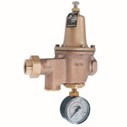
A high performance but low cost water pressure reducing valve from Watts Water. Image copyright acknowledged.
Finally, keep in mind that people can be terribly ill with issues on potable water. We aren’t biologists, but lots of very nasty diseases are water-borne. Water is a basic need for life and sickness isn’t what anybody wants.
What materials and components are compatible with potable water?
This is what we have learnt and where we look for answers. Web links are at the end of the article. As always, we aren’t chemists or materials technologists. Please correct us if we are wrong.
What Seals are compatible with Potable water? Elastomers are a big issue. Don’t get it wrong.
You have to start somewhere. We have traditionally started with FDA approvals and then checked NFS/WRAS. Other people will do this a different way, for example looking at their existing parts bin if they are already big into potable water.
A good start is which seal materials are FDA approved for food use. The simple answer is that you source specific FDA approved grades. The stock commercial grades won’t be a good choice. As seals, they will work but in terms of constituent chemicals they won’t. Just buy the approved seals and get certification with correctly labelled bags. If we have sourced an FDA approved seal, we would then expand our search to checking that the elastomer is also approved for water drinking water systems. We have talked about the various regulating bodies in different parts of the world.
Nitrile, silicone and EPDM are the most commonly available. FKM/”Viton” is also available. Do keep in mind that lots of potable water systems are also running on hot water. That is a different problem and will move designers to use FDA approved silicone or EPDM. When steam comes into the equation, EPDM is used.
An important commercial point is that if you are a manufacturer mass producing a domestic water system valve that is UK WRAS approved, you would most likely get a batch of special seals moulded in your chosen WRAS approved compound. However, if you are on the small batch end of things and designing a new potable water product, you will struggle to find a dependable range of WRAS approved seals from seal stockholders. FDA seals are commonly available, but only in certain compounds like silicone. So, although all these different compounds are “available” for potable water, don’t presume that you can always buy them off the shelf and design with continuity of supply in mind.
What metals are compatible with potable water?
Is stainless steel suitable for potable water?
316 and 304 stainless are compatible and very widely used. We would say that in our world, 316 stainless is our first choice. Other manufacturers use 304 stainless which is extensively used in water and food. The corrosion resistance isn’t quite as good as 316 stainless. We are machining and fabricating our parts. We aren’t using castings as we don’t do volume manufacture and don’t need complex forms and connections. If you are large volume manufacturers in the water industry, very often castings or mouldings are the only way to cut material cost and design in complexity at an economic price. If you are a legacy manufacturer, you will know how products have been made previously and will draw upon that knowhow.
Is aluminium alloy suitable for potable water?
No, not really. If we were manufacturing kit for potable water, we would say no even if the alloy was anodised to build up the oxide layer. The common view would be that chlorine in potable water doesn’t go well with aluminium. That is a corrosion issue. In the first instance, we would say that aluminium isn’t an FDA approved material for potable water.
Aluminium building up in potable water is ultimately a health risk, with different risks at different levels.
But lots of drinking water bottles are aluminium alloy. Invariably potable water is not in contact with the alloy itself; these bottles are usually lined with a plastic or resin, or indeed hard anodised.
Why is copper and brass so commonly used in potable water systems? Should I still be using copper and brass with potable water?
There are probably a few answers to why copper and brass are used so commonly. They have been used for a long time, can be worked to provide very compact and inexpensive components plus brass can be cast to provide components that are difficult to produce by other means. The ability of copper to be soldered and formed in situ is also very useful. Copper is naturally resistant to the growth of microbes, which is a significant benefit. As to whether you should continue to design copper and brass into potable water systems, the key question is alternatives. A plastic polymer may appear perfect, but you may need to mould tens of thousands. Buying in a proprietary moulded component might cost a lot more than your own brass or copper solution.
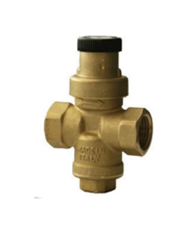
Brass castings are amazingly versatile and low cost as a valve body design solution. Image Flocon.
Are there health concerns with copper and brass in contact with drinking water?
There are health concerns on excessive copper in drinking water, although the web probably summarises these better than we can. As with every health risk, you have to find an alternative that does not open up different risks. Brass is an alloy of copper and zinc with historically small amounts of lead added. Health concerns over lead means that the requirement for lead-free brass potable water fittings in mains water systems is going to become a reality very soon in the EU. That has presented its own issues for manufacturers as lead is added to brass to allow it to be machined easily.
What is the corrosion risk with brass in a potable water system?
As noted previously, galvanic corrosion within a water system is a real issue. You have the problem of water that tastes terrible and failure in brass components within the system. Water can also become contaminated and harmful. The industry specifies low corrosion grades of brass. Talk to your supplier and look up the background to all the different grades. Alternatively, move to copper or plastic.
Is lead compatible with potable water?
The answer is no. It was used almost universally for 2000 or more years right through to the 1950’s in UK homes. The health risks of lead in drinking water are unacceptable, so the material is being replaced. That said, the web tells us that maybe over 9 million UK homes still have lead pipework in their drinking water system. Also note that solder used to join copper pipes previously contained lead. Plumbers’ solder is now lead free.
Is glass a good material for potable water?
The answer is yes, subject to all the issues around glass such as strength and impact resistance. We all know it is suitable for potable water, as it is still used for drinking water storage and transport. Plastic has replaced a lot of applications for glass bottles and vessels for economic as well as functional reasons. For our discussion on potable water systems and storage, maybe it has a limited place. It would still be a valuable material to use in laboratory and high purity process systems. Intuitively, you can disinfect a system made from glass without the medium leeching into the glass. We talk later in the paper about cleaning the “slime” and green algae from potable water systems.
What polymer plastics are suitable for potable water?
It is probably true to say that now plastic is the predominate material used for potable water remote storage and piping. There are lists of plastics that are “approved”, some that aren’t and some peripheral issues that will become more important over time.
What plastics are on the US NSF list as proved for potable water?
We have started with the NSF / ANSI 61 list as opposed to territories outside the USA. A starting point on which plastics are approved for pipework and storage of potable water are HDPE (High-Density Polyethylene), PE (Polyethylene), PEX (Cross-linked Polyethylene) and PVC (Polyvinyl Chloride).
What plastics does the FDA approve for contact with foodstuffs and can I design using FDA materials in contact with potable water?
Yes, we would use an FDA approved plastic for potable water that isn’t a system connected to the mains water. The FDA are specifying both High and Low density Polyethylene, although low density polyethylene is used more for packaging in contact with foodstuffs. That said, we note that John Guest “Speedfit” plastic tubing for water systems is a low density Polyethylene (LDPE) quoted as being more durable than higher density Polyethylenes. PP (Polypropylene) and PET (Polyethylene Terephthalate) are on the FDA list. Also are their list are engineering plastics such as PEEK (Polyether ether ketone,) PC (Polycarbonate) and POM (Polyoxymethylene.) We have used PET in the past and PEEK has provided us a very high performance but expensive material for valve seats and such like.
We are great fans of Dupont’s “Delrin” POM natural acetal homopolymer, which is FDA approved for foodstuffs and NSF approved for potable water. Delrin is an acetal homopolymer POM which has enhanced properties is certain areas over an acetal copolymer POM. We would say it is a bad mistake to use the homopolymer and copolymer interchangeably. These aren’t the same material, so call up one or the other in your design.
POM (Polyoxymethylene) is commonly known as copolymer Acetal. The natural (or “white”) variant is FDA approved. Our understanding is that you don’t need to specify an FDA approved grade if you are using natural material, although a blue FDA grade is also offered. Over the years, we have commonly used a black acetal copolymer for parts where we need to differentiate them from our Delrin homopolymer natural material used for valve seats. The black material isn’t FDA or NSF approved.
We think the other very useful plastic for our business is UHMWP (Ultra High Molecular Weight Polyethylene.) This has different properties to high density polyethylene but is both NSF/ANSI 61 and FDA approved, subject to checking that you are specifying the right grade. Our one observation on this material is that it is a dramatically low cost bulk material. We once ran into a quality problem with some components and that was the response from the bulk manufacturer. We only had one isolated problem in decades.
What “resins” are compatible with potable water?
This is an interesting question. We remember pleasure boats with polyester resin fresh water tanks and a nasty taste. That was a long time ago but highlights a point.
The web tells us that certain epoxy resins are approved by the NSF under ANS 61 for use in fresh drinking water systems. Epoxy resins might be used for laying up vessels or tanks, acting as an adhesive or by manufacturers of filament wound vessels. These compounds will have then minimum in contaminants leeching out of the resin into the water. This assumes they are used and cured properly.
One particularly important application is in spiral wound pressure vessels for Reverse Osmosis systems. You would definitely not want contaminants leeching out into the brackish or salt water before processing then finding their way into the fresh water. The same is true for RO systems for high purity processes such as semiconductors or pharmaceuticals.
We note in the discussion on the linings applied to aluminium alloy drinking water containers that BPA (Bisphenol A) can leech out of resins used for linings. This is a key ingredient in the manufacture of lots of epoxy resins and provides substantial benefits. This question over contamination of potable water in contact with the cured resin is a valid health matter. There is enough information on the web to answer any questions on selecting a resin.
Looping back to the question of using polyester resin in a laminated fresh water tank and finding a horrible taste. The answer is that generic polyester resin isn’t NSF or FDA approved but special grades are offered and do meet the requirements.
Certainly, epoxy resin seems to be used in high pressure spiral wound pressure vessels for RO systems. This seems to be down to the high strength of the material and its resistance to chemical degradation.
What greases, lubricants and release agents are suitable for potable water?
Which special greases and lubricants are specified for potable water?
We have used Molykote 111 from Dupont/Dow Corning for years for lubricating seals in our water hydraulics and potable water equipment. It is an FDA and EPA approved silicone grease. This silicone grease is non-toxic, copes with a wide range of temperatures and is not hazardous. There are other approved lubricants. We are looking from the standpoint of using grease on a seal and that material being in contact with water. The FDA see things differently in that they a rating lubricants for occasional contact with food through to the other extreme of people consuming them. There is a big difference there.
Are any lubricants suitable for use in a reverse osmosis system?
That is a good question to ask. A worrier might think that a whole range of compounds could coat the membrane and damage the pores. Is that really an anxiety? It sounds as if the answer is no, subject to selecting the right material. If a lubricant was “washed out” into the system, that sounds like a disaster. Molykote 111 is again identified as being a good choice.
Is the release compound used for Reverse Osmosis spiral wound pressure vessels a hazard with potable water?
The answer is yes. You need to research this. Molykote 7 from Dow seems to be one safe solution. Our experience is that silicone compounds are very tenacious and difficult to remove from a surface. You would be wise to use an EPA approved release agent during production rather than try to degrease the inside of a spiral wound vessel later. That’s what we think.
What coatings and finishes are suitable for potable water?
Should I be pickle and passivating stainless steel or even electropolish my stainless?
For our production, we would always pickle a welded assembly to remove any burn then passivate to build up the protective oxide layer. We would say that is a must. Electropolishing is a further process that polishes the microstructure of stainless steel, making it smoother, cleaning out impurities and achieving a surface that will harbour less bacteria. It is widely used on potable water systems. Note that you can electropolish inside components that are not accessible by other means. We are massive fans. It isn’t cheap. The biggest issue for us is the need to design the part so that large flows will go through and over every surface. Lots of drain holes are a must. The process chemicals are nasty and need to be flushed away beyond doubt.
Are there other metal finishes that are compatible with potable water?
We have already talked about using a plastic “liner” on potable water systems. Could a dipped or sprayed “finish” be substituted for a moulded or blown liner? Epoxy coatings are used for the internal surfaces of pipes and other components. Hot dip galvanising is also still used to protect steel components for potable water service. Note that the galvaniser needs to be using an approved process that is audited by the NSF in the USA as suitable for drinking water. In the UK, it appears that hot dip galvanising isn’t in itself an approved WRAS process but can be part of a WRAS approved product. Take specialist advise on this. Before applying any type of finish for potable water, the surface most definitely needs to be degreased to remove grease and impurities.
Are anodising or hard anodising suitable for potable water systems?
The answer seems to be yes if you check the specific process as being suitable. Anodising and hard anodising are protective finishes for aluminium surfaces that build up the oxide layer. We use anodised aluminium extensively in our products for oil hydraulics, but as noted previously we aren’t great fans for potable water. Are we right or wrong?
Should I be degreasing, cleaning or disinfecting a system before running it initially on potable water?
As noted, you would need to degrease a surface before applying a protective coating for potable water systems. But what about as a commissioning process or periodic servicing requirement? This is a big necessity. Almost a whole world of techniques and knowhow. We would say this needs to be researched and documented carefully. Typically, a system might be disinfected using chlorine to kill pathogens, heat or UV light to achieve the same. Chlorine or similar disinfectant will need to be flushed very carefully to remove residual traces. As noted early in this paper, human taste is programmed to be very aware of water than doesn’t seem quite “right.” A vanishingly small content of chlorine may be permissible by law but still linger as a taste. Maybe. heat or UV won’t taint the water but might be more difficult to administer to a system. You are adding in complication with electric devices.
What is the “slime” and “green growth” associated with potable water systems and how do I remove it?
That’s a deep question. We are not biologists. Maybe it splits into designing to minimise organic growth and then how you remove it. And what is it? The “slime” is a “biofilm” which is a colony of bacteria and fungi that bind together and exist on surfaces. Generally, they don’t give rise to a health risk although there is the risk of more harmful bacteria within them. Legionella could grow within such a film. This type of film may give rise to an odd taste to the water. The films are removed by disinfection. We think you would seek advice. Equally important is to stop or slow down the formation of films. The surface of internal pipework and vessels is one issue. Copper is a natural biocide. Even electropolished stainless steel is inherently smoother and less likely to culture bacteria than some other surfaces. The same is true for glass as far as providing a very smooth surface. Green films and algal deposits are a different issue. They need light, so clear glass or translucent system components may cause problems. Again, biocides will kill algae but the application of these needs real care in a potable water system. It needs expert knowledge, a plan and application in a controlled manner.
We mentioned legionella and scale earlier. Our take is that it isn’t a design issue as such but more a health & safety issue. You can’t really design it out. You might mitigate it to a point but it is down to how the system is maintained. Maintenance become part of the design process on a system.
What can Sarum Hydraulics offer on Micropac potable water pumps?
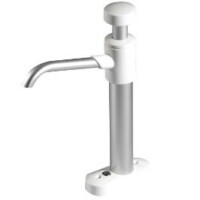
A very low cost portable water pump from Whale.
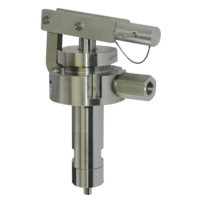
Sarum Hydraulics Micropac MU hand pump for water and potable water service.
We manufacture 100% 316 stainless and polymer hand pumps that are suitable for water service and also potable water. We won’t be economic on mass market, low pressure potable water pumps but specialise on higher pressures. Water is our area of expertise. After over four decades, we are the experts. Talk to us about your application.

Leave A Comment