
Why is “country of smelting” suddenly so important?
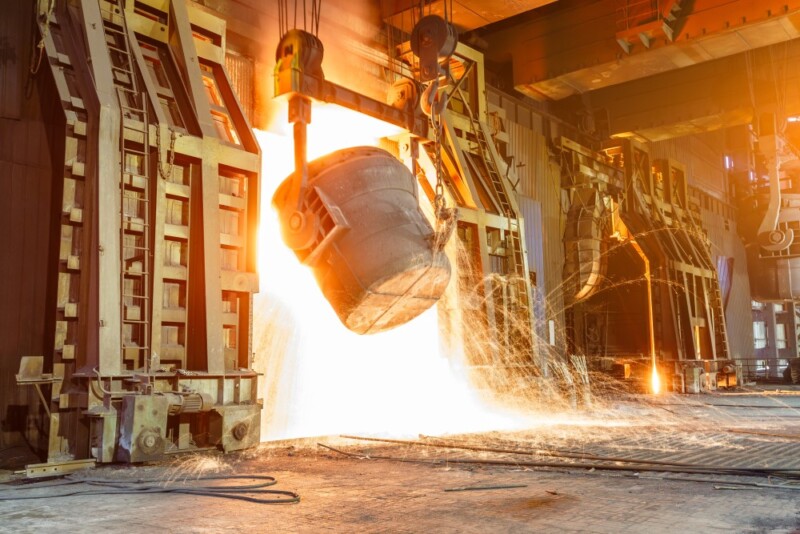
Smelting produces the raw material billet for steel or aluminium for further processing. Steel is shown.
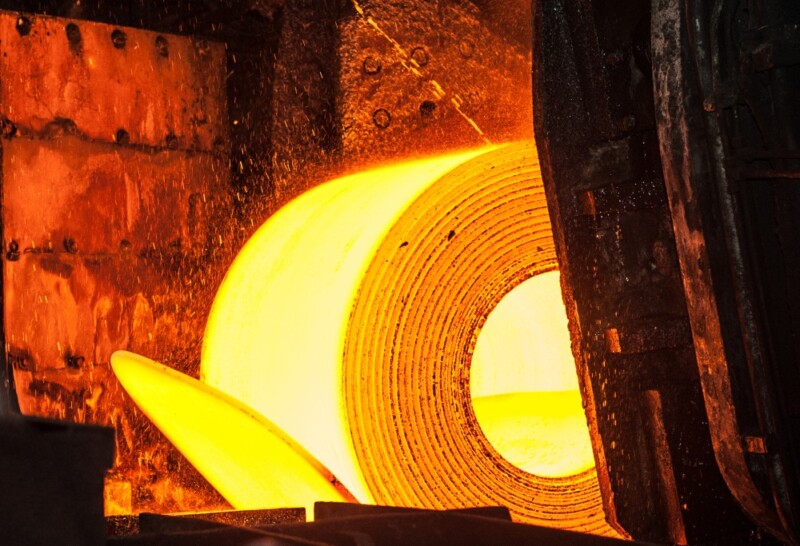
A rolling mill or extrusion press will produce the material that your material supplier buys. A steel rolling mill is shown.
Why you need to take “country of smelting” so seriously?
For many years, certain sectors in hydraulics have been insisted on knowing the country of smelting. For example, the defence, offshore and process sectors often needed this information. Suddenly, the reality is that kit for export may be stuck in customs somewhere in the world because this information is missing. The consignment may be returned to sender if the information is not forthcoming. So, what is the change? Why is it suddenly important?
So, is the “country of smelting” the address on the material manufacture certificate?
Probably not. Possibly yes, but you need to ask and get it clarified in print. The answer is that the country of smelting may be the same as the country of production of the materials that you purchased but very likely not. Some mills that finish material might have the smelter as well. One Indian fastener manufacturer also smelted their own material. We can’t tell you how common it is.
Why might the “country of smelting” be different from the country of production of the material that I purchased?
This is basic. Raw metallic material is produced from ore in a smelter to produce a billet. The billet is traded as a commodity. This raw material in the form of a billet is then further processed to produce the material that you have bought, for example by being rolled to the final section or extruded through a die to produce an extrusion. They can sometimes be the same location or firm, but it seems invariably to be a different producer. Quite often in a different country. So, we have two different producers, plants and probably countries.
If there are 150 metallic parts in my product, do I need certification with country of smelting for all of them?
The answer is yes, so we are told. At the moment, this seems only relevant should you be exporting to the USA or your product ends up going to the USA down the line. It is onerous.
Sorry, we can’t tell you whether de minimis figures apply if it is one part out of 150. All we have been asked is to provide certificates to substantiate the country of smelt on every single steel or aluminium part on the bill of materials. Does that sound tough? Yes, it is.
Why should I bother about the country of smelting?
We would say that nobody can hide behind a certificate from the material supplier that implies that the source material was “OK.” We need to actually know the country in our new world with increased restrictions on international trade.
For us, there are three historic reasons and a fourth that is in tune with the new world trade reality.
- Sanctioned countries, companies or individuals. For years, we have not been able to use and resell materials produced in a sanctioned country. That may be a very broad statement, but we understand our company can’t do it by Law. The ramifications are deep. There are some overlapping issues here. The Ukraine war has focussed on Russian materials. Even before the present conflict, there were sanctions in place on specified countries, companies and individuals from various governments. Those have been part of the business landscape for a long time for exporters.
- Quality. Your customer may have simply instructed you on a contract not to use material from a certain country because of quality anxieties. Or as a company, you have had problems and can’t risk the same supplier or country again. These issues can be quite complex. In the past, there have been blanket bans flowed down through our customer supply chain from certain people. For example, there was an issue with traces of radioactivity in some materials and even a one off quality problem at a steel company in the Far East that were flagged up in our customer purchase conditions. That is par for the course with manufacturing and our Sarum Hydraulics quality systems cope with this.
- Modern Day Slavery and Conflict Minerals. Most manufacturing businesses will nowadays have Modern Day Slavery and Conflict Minerals policies. These requirements will be included in your purchase terms. Conflict Minerals is an allied issue. We have had to check that smelters on certain materials are only buying in the alloying elements from an approved smelter on a list. That had been a historic problem in countries like the DRC, a key producer of these elements. Again, our quality system at Sarum Hydraulics copes.
- And the new reason? Being able to disclose where in the world all your steel and aluminium come from. The 2025 United States regulations for tariffs on imports seem to have moved this up a gear. Could any international government want to know this to decide trade policy in years to come? Maybe in a world where trade blocks and friendships can change quite rapidly, governments need to know what imports have material content from which counties. Our ally one day might suddenly need extra tariffs or even a ban the next week. That is rather far reaching and can happen quickly. We’d say, get ahead on this and know the origin. The USA requires this now. Could others follow?
I don’t export so it can’t apply to me. Why are you telling me this?
Sarum Hydraulics is a niche manufacturer of their Micropac® pump. Back in 1983, the bulk of our turnover was UK, feeding the shipbuilders, mining and massive industrial base that the UK had. Roll on 40 years. The reality now is that there is a very good chance that your UK-manufactured product will be exported by you, your customer or your customer’s customer. That’s the reality.
We think this is relevant for UK manufacturers.
What happens if my material supplier refuses or cannot provide the country of smelting as a written certificate or statement?
We would say that is not acceptable. If your supplier is 100% sure that the source material isn’t from a sanctioned country, then they should know which country it came from and the name of the smelter. That has been the way for years. In reality, the same is true with other contract conditions. For example, was the material produced in a smelter that doesn’t use slave labour? Maybe this a subtle shift in the last few years. Your firm may have a policy in place to state that no material from sanctioned countries is used and indeed add this as a requirement on purchase orders. Actually requiring the NAME of the country of production is one simple step beyond, but we are sure this is here to stay.
I’m selling the parts or product to somebody else who sells it. Is evidence of smelting my problem?
Maybe your product is being integrated into another piece of kit and going through four different resellers. You could tell your customer that you can’t provide this information. We would say that if somebody really needs this information, you run the risk of not getting another order. If the request was clearly written on an order or in Terms and Conditions, there isn’t really an excuse. It should have been seen during contract review. If a customer has forgotten to ask, that is a deeper discussion. It can be very difficult indeed.
Can I simply tell my customer that I don’t have the information?
Was it requested in the contract? Even if there was no mention of this requirement, it is possible or even likely that somewhere down the chain, your kit is stuck in USA customs because “the paperwork is wrong.” The equipment will probably be rejected. After four decades in business, Sarum Hydraulics goes the extra mile to support their customers.
Haven’t sanctions regimes been around for years?
Let’s make sure we are talking about the same thing. Here we are discussing the country of origin on steel and aluminium metallic materials as smelted and bought in by your company or as an element of a component or part. This reflects 2025 USA tariffs which have rather upended world trade. Our bet is that this will be here to stay. It is also true to say that for a long time, you would not have been buying any material that, for example, was produced in North Korea. In the last few years, Russian steel or aluminium was banned, so we were always told. Here, we are saying that you need written confirmation on certificates of the country of smelting. Yes, this will be important confirmation that the material wasn’t produced in North Korea (which would be very unlikely) but we are adding in this extra record keeping and disclosure.
Don’t confuse this discussion on buying materials with a totally parallel discussion that could be had on selling product. This isn’t relevant here. There are sanctioned countries, companies and individuals which you wouldn’t sell anything to. Somewhat deeper are Export Control regulation around the world. Our only advice is to get expert help from a consultant if in doubt. Some kit or technologies are clearly for use on weapons or allied applications. Look at the US CCL (Commerce Control List) which restricts the export of certain products and technologies. It is very far reaching in the list of areas that are restricted, but not the discussion here. The list covers strategically important technologies, which is far wider than defence. “High pressure hydraulic pumps for fracking” turn out to be a very specialist beast and not Micropac ® 700 bar or 1000 bar hand pumps. The devil is in the detail. We think that the export control regulations are something that certain manufacturers are up to speed with, despite it being onerous. If these are your products, even if they are “dual use”, you have to acquire the skills or third party help to navigate through. We have at Sarum Hydraulics. In contrast, regulations on the smelting of metallic materials are much more of a blanket requirement and quite unambiguous.
Will the need to provide evidence of the country of smelting go away?
We fear not. Being asked to provide evidence of the smelter for steel and aluminium metallic materials is pretty fundamental to a manufacturing business like ours. Buying material is the starting point in manufacturing a Micropac pump. From our perspective, this just seems to be here to stay and manufacturers need to be ahead of the game. Suddenly being told that you can no longer use smelting from a certain country is very possible. Or indeed that somebody who was at the top of the undesirable list is now our friend and their material is fine. Demanding times, we fear.
That is business. You adapt and move forward or can’t offer a service.
What should my EN 10204:3.1 certificate now say?
In summary, as well as insisting upon material inspection certificates to EN 10204:3.1, your company now makes it practice to obtain country of smelt at the same time. This will guard against the increased likelihood of being asked some way down the road for this information. That is a very sound business tactic in a turbulent world.
Sarum Hydraulics and Micropac® hydraulic pumps.
This is our take on what seems like a significant change in certification and record keeping for manufacturers in 2025. We aren’t experts but know how we have had to adapt. Please tell us if this needs amending. In the meantime, we continue to design and manufacture our Micropac® pumps for hydrotesting, filling, charging and cycle testing for customers throughout the world. After over 40 years, we are the experts. Contact us to discuss your requirements.

Leave A Comment